

Why Become an Electrician in the UK?
The UK is currently suffering from a constant shortage of skilled tradesmen. This is despite the fact that new homes are being constructed at the rate of more than 1 million annually. This is not a good indicator of the supply of skilled people to do this kind of work.
There are many different qualifications available to those who want to become UK electrical contractors. The first step is to start an apprenticeship. This is a course of education and training that lasts for 3 to 4 years.
Qualifications
An electrician is a good option for a career if you're seeking a job the UK. This is a highly lucrative career with a growing demand for qualified electricians all over the world.
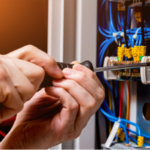
There are a variety of routes to become an electrician. They include apprenticeships as well as certificates gained by working experience or taking courses. The correct path can make all the difference to your career.
An apprenticeship is the traditional route to earning an electrical certificate. It's a 3-or 4 year program that includes classroom instruction in technical areas and vocational tests. It's also a great way to gain on-the-job experience and build up useful references from work.
Another option is an City & Guilds Level 2 or 3 Diploma in Electrical Engineering. This course will teach you the skills needed to work as electricians in domestic industrial, commercial and residential environments.
As opposed to an apprenticeship that requires you to work concurrently as you study for your diploma. However, you have to attend college at a minimum of once every week during term time.
In addition, you must complete a practical and theoretical exam called the AM2 or AM2-S exam to complete your certificate. This is normally taken on a weekend and can be scheduled through certain educational institutions, but you should consult with your provider prior to making an appointment in.
If you're not able to an apprenticeship or prefer to pursue your studies on your own, an alternative route is to complete an NVQ at Level 3 in Electrical Engineering. It can be done at your local college or online.
An NVQ is a thorough qualification that covers everything from safety and health to wiring installation, inspection testing, and much more. It is important to note that not all learning providers include AM2 or AM2-S as part of the cost of your NVQ. You should confirm the cost prior to registering.
Electricians are required to complete many tasks including rewiring homes or installing new electrical equipment to working in agricultural or industrial settings. Additionally, they need to be certified in safety procedures and keep their own insurance.
Training
Training to become an electrician is an excellent way to improve your skills and learn how to work safely. It also provides you with the tools you need to get jobs in the future.
There are many different ways to as an electrician in the UK. You can pursue an apprenticeship, a diploma, or technical certification.
An apprenticeship is a popular way to enter the field and can be completed over three to four years. It is the most preferred method of gaining the skills and knowledge needed to become an electrician who is certified. You can also earn money while you learn which can aid in paying for the cost of your education.
A technical certificate, also known as a diploma also referred to as diploma, is a longer course that can be completed in two years. It teaches you the fundamental mathematics and science essential to working as electrician. It is usually workshops and classroom-based and includes exams which are spread out over the course of the year.
If you aren't proficient in maths, it might be difficult to complete the course. However, it's worthwhile to persevere with the lessons. You must be enthusiastic about electricity and ready to put in the effort to finish it.
The next step is to get an advanced level 2 or 3 electrical installation certificate. These courses are City & Guilds approved and will give you the knowledge to perform electrical work.
These certifications are a great method to begin a new career . They can be completed in less time than an apprenticeship, but still allowing you to work full-time. They also offer the flexibility to work in a variety of fields.
You can learn new skills and explore new fields by pursuing a course to become an electrician. Most institutions of learning are flexible. This means that you could get a job and then return to complete your studies later.
Work Experience
As electricians, you utilize your skills and knowledge to supply light, power and energy wherever it is needed. This makes your job sustainable and future-proof. Electricity is an essential part of our homes, offices and automobiles So your expertise are always in demand.
Electrical work includes installing repairs, testing and installing equipment and wiring. You can work in many different industries that range from manufacturing and industrial sectors to telecommunications and power generation.
Your responsibilities and the type of job you have will have a major impact on your pay. electricians in the uk may earn commission, salary or per hour. Your earnings will increase as you grow in experience and become a master electrician.
Your education, experience and duration of service will all influence the amount you earn as an electrician. Generally you should earn between PS18,000 to PS42,000 per year.
Your employer should not just pay you a decent salary but also provide safety-related training and a pleasant working environment. electricians in uk could include a safe working space with adequate ventilation, an on-site car wash and the opportunity to attend industry events.
Employers may also assist you in obtaining your Level 3 Electrotechnical Experiential Worker Certification. This will allow you to work within this field. This can be accomplished through a college program or by registering for an apprenticeship scheme with an electrician company.
You'll be involved in a variety of projects throughout your career, ranging from one-day tasks to long-term assignments. These projects are often in cold, damp, or dirty environments. They also require you to work in tight spaces or in high places.
Your job site will usually be far away from your home, and you'll be required to travel during shifts or on call. Sometimes, you'll have to travel up to 100 miles to complete your job.
Visit the websites of local apprenticeship boards or training institutions to find out more about this profession. They can tell you which qualifications are required for the job you are looking for and also provide more information on what to expect during your training.
Licensing
If you'd like to be an electrician in the UK You will need to complete a few qualifications and gain some experience. It is also important to understand the kind of work you would like to accomplish so that you can pick the appropriate training courses.
electricians uk is a heavily regulated electrical industry and it is essential to know the requirements for licensing. You will need to pass an exam to prove that you have the required expertise for the job. After you have completed your training and passed the test, you are able to become an electrician.
An apprenticeship program that has been endorsed by a respected organization such as the National Inspection Council for Electrical Installation Contracting will be an ideal option. These bodies are extremely effective at making sure that students are taught everything they must be aware of the industry.
Apprenticeships typically last for 3 to 4 years and give you the opportunity to study and work simultaneously. Typically, you'll be working on different projects with your instructor during the day, and also have the opportunity to take part in college-related classes at night.
During your apprenticeship, you'll also be required to take tests that show that you have the skills required to be an electrician. These tests are provided by the bodies of electricians. They cover topics like circuits and wiring as well as safety standards.
After completing your apprenticeship and completing your apprenticeship, you'll be able to go out and begin looking for jobs as an electrician. Certain licensed companies may give you the opportunity to obtain a full license.
The Office of Gas and Electricity Markets regulates the electrical industry in the UK. The Office of Gas and Electricity Markets is accountable for ensuring all electrical installations adhere to relevant laws. It regulates the price and quality of electricity services and also how they can be charged.
There are separate licensing systems for England, Wales, and Scotland. In England the Electrical Installation Contracting Act 1989 requires all licensed electricians to be certified through an accredited scheme. This is known as a 'competent person' registration and is built on the IET Wiring Regulations.